 ultimate-guide
Average Cost of Custom Kitchen Cabinets: 2026 Review
Table of Contents
- How Much Do Custom Kitchen Cabinets Cost? A 2026 Breakdown
- Custom vs Semi-Custom Cabinets Cost: What You Actually Pay For
- Factors Affecting Custom Cabinet Pricing: Materials, Hardware, and Finish
- Kitchen Cabinet Installation Labor Costs and Project Timelines
- Hidden Costs: Maintenance, Long-Term Care, and Sustainable Material Premiums
- ROI of Custom Cabinetry: Does It Add Value to Your Charleston Home?
- Frequently Asked Questions
Last Updated: September 28, 2026
How Much Do Custom Kitchen Cabinets Cost? A 2026 Breakdown
The honest answer to what you'll pay for the average cost of custom kitchen cabinets is: it depends on linear footage, material tier, and how much of your kitchen is actually cabinet. This guide from The Pampered Home breaks down the pricing model, the material premiums, and the labor variables that move your number most. Industry pricing conventions, documented in NKBA kitchen and bath market research, consistently show that cabinetry is the single largest line item in a kitchen remodel, often consuming a third or more of the total budget.
The Linear Foot Pricing Model Explained
Linear foot pricing is the practice of quoting cabinetry by the running length of cabinet along your wall, measured in feet, rather than by individual box. It bundles the cabinet box, face frame or frameless construction, doors, and standard hardware into one per-foot figure. Upper and lower cabinets are typically quoted separately because base cabinets carry more material and labor.
Why National Averages Mislead Charleston Homeowners
National averages flatten regional differences in installation labor and material sourcing, which is why they rarely match what a local homeowner is quoted. Older homes with out-of-square walls and unusual layouts require more custom fitting, and that time shows up in the price. What most guides miss is that the same cabinet specification can land at very different totals depending on how much carpentry the existing space demands.
Custom vs Semi-Custom Cabinets Cost: What You Actually Pay For
The price gap between custom and semi-custom cabinetry comes down to three things: dimensional freedom, material choice, and lead time. Custom-built cabinets are made to your exact measurements and layout, which matters in older homes where nothing is standard. Semi-custom cabinets start from a manufacturer's size range and adapt within limits. Stock cabinets come in fixed sizes only. You pay more for custom because you're buying fit, not just finish.
Stock, Semi-Custom, and Custom: A Tiered Comparison
| Tier | Sizing | Material Options | Lead Time | Best For |
|---|---|---|---|---|
| Stock | Fixed sizes only | Limited | Off the shelf | Simple, standard layouts |
| Semi-Custom | Adjustable within ranges | Moderate | Weeks | Mostly standard kitchens |
| Custom | Built to exact dimensions | Full range | Longer | Odd angles, full design control |
Factors Affecting Custom Cabinet Pricing: Materials, Hardware, and Finish
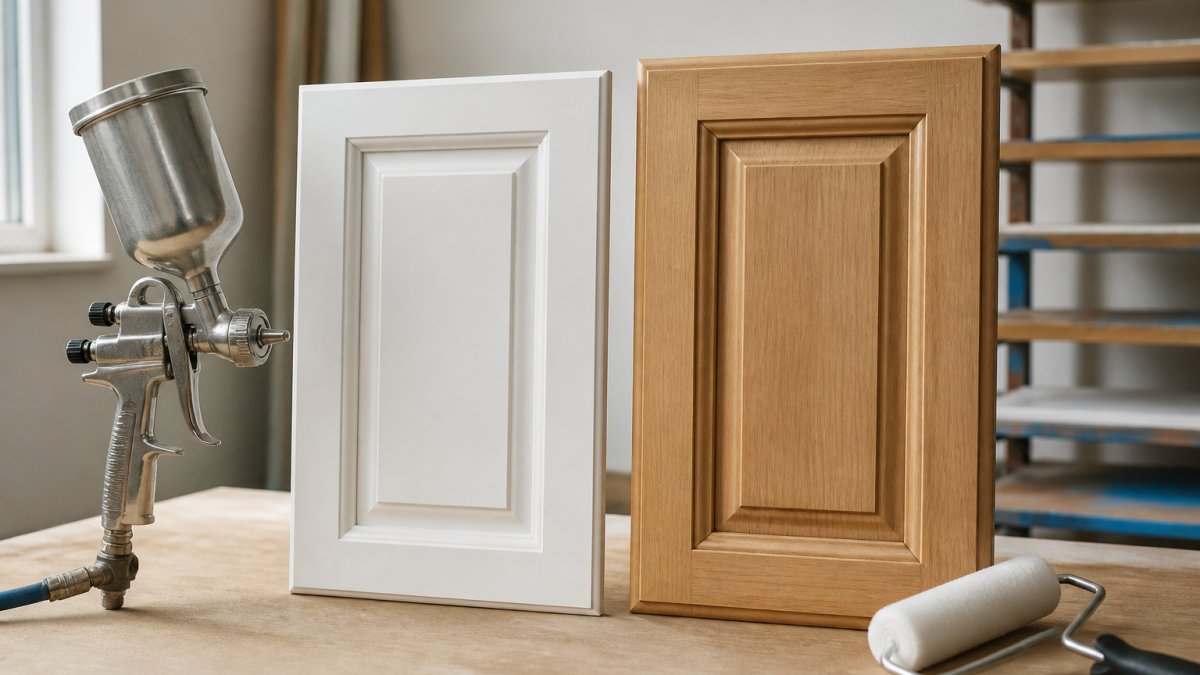
Material and finish choices move your total more than any other single variable, and the way to see that is to watch how each decision shifts the per-linear-foot number rather than the project total. A cabinet box built from plywood construction holds up better than particleboard over time, and solid wood or hardwood faces cost more than veneer. Wood species matter too: a paint-grade species costs less than a premium hardwood chosen for its grain.
Wood Species and Plywood Construction Costs
The species you choose affects both cost and durability, and the spread between the cheapest and most expensive option is wide enough to change your tier. Maple, oak, and cherry each carry different price points and take stain differently. Plywood construction is the standard for a durable cabinet box because it resists warping better than composite cores. If you're weighing solid wood against veneer, remember that veneer isn't a downgrade; it's a way to get a premium species look on a stable substrate.
- Paint-grade species (often maple or poplar): the least expensive face option, chosen because the finish hides the grain. Best when you plan to paint.
- Standard stain-grade hardwoods (oak, maple): mid-range, and the workhorse of most kitchens.
- Premium hardwoods (cherry, walnut, quartersawn oak): the top of the species ladder, priced for grain character and color depth.
- Veneer over a stable core: not a downgrade, it delivers a premium species look on a substrate that resists seasonal movement.
- Plywood vs. particleboard box construction: plywood costs more upfront but resists warping and holds hardware screws far better over the life of the cabinet.
Soft-Close Hinges, Drawer Slides, and Finish Grade
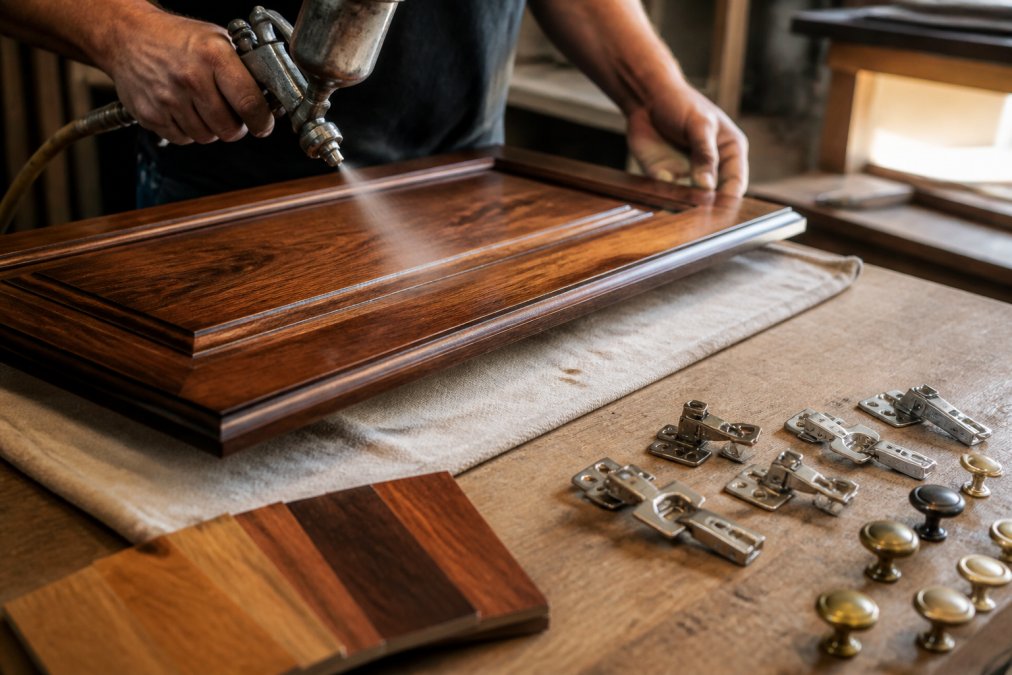
Hardware is a small line item that punches above its weight. Soft-close hinges and quality drawer slides add cost but eliminate the slam and rattle that cheap hardware produces within a year. Finish grade is the other quiet cost driver: a sprayed coating applied in a controlled shop environment holds up better than a brushed-on finish, and it's why fine sprayed trim finishes command a premium.
- Stain vs. paint. Paint typically requires more prep and build coats to hide grain; stain requires careful sanding so the color reads evenly across doors.
- Hand-applied vs. sprayed. A controlled shop spray delivers a more uniform film and fewer brush marks, which is why it commands a premium over a brushed-on finish.
- Sheen level. Higher-gloss finishes show every imperfection in the substrate and demand more surface prep; lower sheens are more forgiving.
The Sustainable and Eco-Friendly Material Premium
This is the cost category most guides skip entirely. Cabinetry built with certified sustainable wood or finished with low-VOC coatings typically carries a premium over the same specification built with conventional materials, and the premium varies by supplier and certification rather than following a single national rate. The reason is mechanical, not marketing: certified supply chains require documented chain-of-custody tracking, and low-VOC finishes often need different spray equipment, longer cure windows, and more controlled shop conditions.
Kitchen Cabinet Installation Labor Costs and Project Timelines
Installation labor is where quotes diverge most, because it's priced on site conditions, not square footage. Cabinets that arrive plumb and square install faster; walls that are out of level add hours of shimming and fitting. Beyond the boxes, you're paying for countertop integration, filler panels, crown, and the carpentry that ties cabinetry into your trim. Lead time matters as much as labor rate.
How Installation Labor Is Actually Billed
Most installers price one of three ways, and knowing which one you're looking at tells you where the risk sits:
- Per linear foot installed. The most common approach for straightforward kitchens. It bundles the box set, leveling, and door and drawer alignment into one per-foot figure.
- Per box or per cabinet. Common when the layout is complex or the boxes are unusually sized. It rewards a simple, repetitive install and penalizes odd angles.
- Time and materials. Used when site conditions are unknown, older homes, out-of-square walls, or a design that may change mid-install. It shifts the risk of surprises to you.
Regional Labor Rate Variance
National averages flatten the single biggest variable in installation cost: where you live. Labor rates for skilled carpenters and cabinet installers vary substantially across major metro areas, driven by local cost of living, union presence, and how tight the trades labor market is. A specification that prices modestly in one region can price meaningfully higher in a high-cost coastal metro for the exact same boxes and the same finish.
Project Timeline, Phase by Phase
A realistic custom cabinet schedule treats each phase as its own lead time rather than one lump sum:
- Design and measurement. Final field measurements must be confirmed before anything is ordered. This is the phase where changes are cheap.
- Fabrication. Custom boxes are built to your dimensions, which takes longer than pulling semi-custom sizes off a manufacturer's range.
- Finish. Sprayed coatings need cure time in a controlled environment before the doors and drawers can be handled and packed.
- Delivery. Freight and scheduling add days that most homeowners don't budget for.
- Install. Box set, leveling, door and drawer alignment, filler panels, crown, and countertop integration.
Hidden Costs: Maintenance, Long-Term Care, and Sustainable Material Premiums
The purchase price isn't the whole cost of ownership. Real wood cabinetry needs occasional cleaning and refinishing to stay looking new, while lower-grade finishes may need attention sooner. Sustainable and eco-friendly materials often carry a premium, and that premium varies by supplier and certification. This is the category most cost guides skip entirely. If you plan to stay in your home for years, factoring in long-term care changes which tier makes financial sense.
- Routine cleaning and touch-ups: low cost, ongoing
- Refinishing or repainting: periodic, depends on finish grade
- Hardware replacement: occasional, driven by use
- Sustainable material premium: varies by species and certification
ROI of Custom Cabinetry: Does It Add Value to Your Charleston Home?
Custom cabinetry can support resale value, but the return depends on how personalized the design is. Buyers respond to quality materials and functional storage; they hesitate when a layout is so specific it only suits one lifestyle. Remodeling industry data compiled by Zonda's Cost vs. Value report tracks how much common renovation projects return at resale, and cabinetry-heavy kitchens typically rank among the stronger performers.
Frequently Asked Questions
Is $30,000 enough for a kitchen remodel with custom cabinets?
It depends on your kitchen size and material choices. A $30,000 budget can cover custom cabinetry for a smaller kitchen using mid-range wood species and standard finishes. However, larger kitchens, premium hardwoods, and complex layouts with islands or full-overlay frameless designs will exceed that figure. Get a detailed quote based on your specific project scope before committing.
What is the average price range for custom kitchen cabinets per linear foot?
Custom kitchen cabinets typically cost more per linear foot than semi-custom or stock options because they are built to your exact specifications. The final price depends on wood species, finish grade, hardware, and cabinet box construction. Request a personalized quote from a local cabinet maker to get accurate pricing for your kitchen footprint and layout.
How do material choices impact the total cost of custom cabinetry?
Wood species play a major role. Hardwoods like maple or cherry cost more than paint-grade options. Plywood construction adds durability and price compared to particleboard. Veneer and finish grade also affect the bottom line. Soft-close hinges and premium drawer slides increase hardware costs. Sustainable or eco-friendly materials often carry a premium. Each upgrade compounds, so prioritize what matters most for your daily use.
What hidden costs should homeowners anticipate when budgeting for custom kitchen cabinets?
Beyond the cabinet box and doors, budget for installation labor, countertop integration, plumbing and electrical adjustments, and old cabinet removal. Custom millwork for odd angles in older homes adds carpentry time. Lead times can stretch if you need bespoke accessories or storage solutions. Always ask for a line-item quote that separates materials, labor, and installation fees to avoid surprises.
What is the typical return on investment for high-end custom kitchen cabinetry?
Kitchen remodels consistently rank among the top home improvements for resale value. Custom cabinetry improves buyer perception because it signals quality and thoughtful design. The ROI varies by neighborhood and market conditions, but high-end cabinetry often recoups a significant portion of its cost at sale. Personalized storage solutions and durable real-wood construction appeal to buyers seeking move-in-ready homes.