 ultimate-guide
How to Maximize Storage in Small Kitchens: 7 Steps
Table of Contents
- Step 1: Clear the Clutter and Map Your Kitchen Workflow
- Step 2: Vertical Storage Solutions for Kitchens That Use Every Inch
- Step 3: Custom Kitchen Cabinet Organization That Works With Your Layout
- Step 4: Small Kitchen Layout Design Tips for Better Counter Space
- Step 5: No-Drill and Rental-Friendly Storage Upgrades
- Step 6: DIY vs. Custom Cabinetry: Where Your Money Goes Furthest
- Step 7: Build an Inventory System So Your Kitchen Stays Organized
- Frequently Asked Questions
Last Updated: September 30, 2026
Step 1: Clear the Clutter and Map Your Kitchen Workflow
Learning how to maximize storage in small kitchens starts with subtraction, not shopping. Most cramped kitchens hold duplicate tools, expired pantry items, and appliances used once a year, each stealing space from something you actually use. Most cramped kitchens hold duplicate tools, expired pantry items, and appliances used once a year, each stealing space from something you actually use.
The Three-Zone Method for Small Kitchens
Professional kitchens organize around three zones: prep, cook, and clean. Cutting boards, knives, and mixing bowls belong in prep; pots, pans, and spices near the stove; cleaning supplies and the dish rack at the sink.
What to Purge and What to Keep
- Duplicate utensils (three spatulas, two garlic presses)
- Expired spices and pantry items
- Single-use appliances you have not touched in 12 months
- Mismatched food storage containers without lids
- Chipped dishes and worn nonstick pans
Keep anything you reach for weekly, plus seasonal or entertaining items stored high or out of the way.
Step 2: Vertical Storage Solutions for Kitchens That Use Every Inch
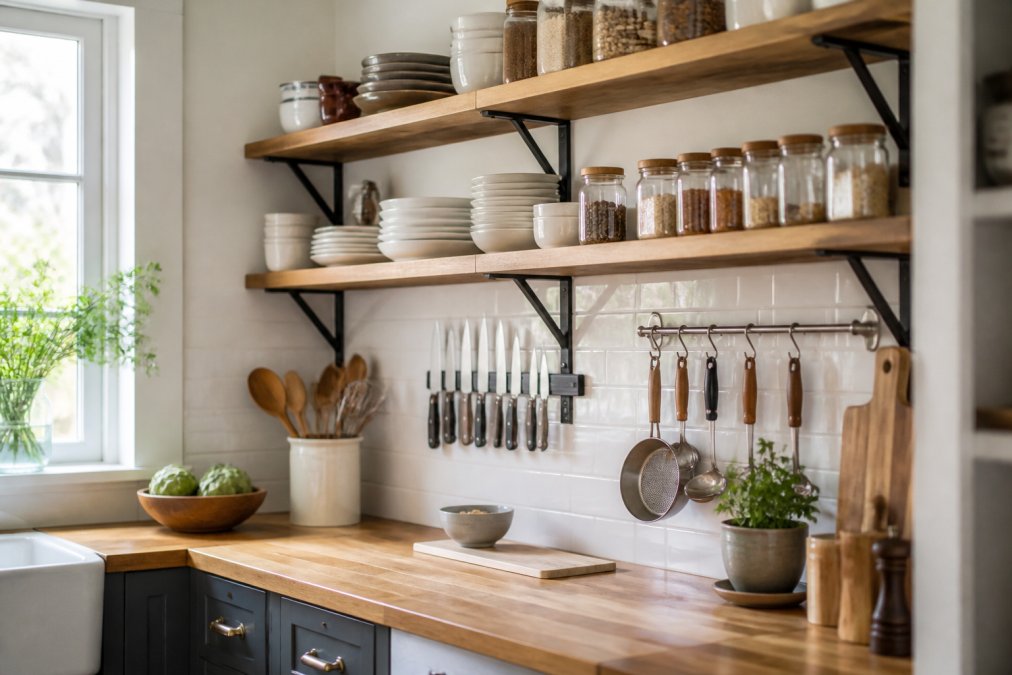
Vertical storage solutions for kitchens turn blank wall space into working storage, and matter most where base cabinets run out fast. The wall above your counter and the backs of cabinet doors are the two most underused surfaces in a small kitchen.
Wall-Mounted and Magnetic Racks
Magnetic knife strips free up an entire drawer. A magnetic spice rack on the refrigerator side holds 12 to 15 jars in the footprint of a cookbook. Wall-mounted rails with hooks handle mugs, measuring cups, and small pans without drilling into cabinets.
Door-Mounted Organizers and Hanging Storage
Door organizers convert dead cabinet-door space into slim storage for lids, cutting boards, foil, and wrap. A door-mounted rack inside a base cabinet holds every pot lid you own in about 5 centimeters of depth, one of the highest-return upgrades in a small kitchen.
Step 3: Custom Kitchen Cabinet Organization That Works With Your Layout
Custom kitchen cabinet organization is the difference between cabinets that hold things and cabinets that work. Builder-grade cabinets come with one shelf and wasted air; the upgrades below fix that, and most fit existing boxes.
Drawer Dividers, Pull-Out Shelves, and Shelf Risers
- Drawer dividers: keep utensils, knives, and wrap in defined slots instead of a jumbled pile
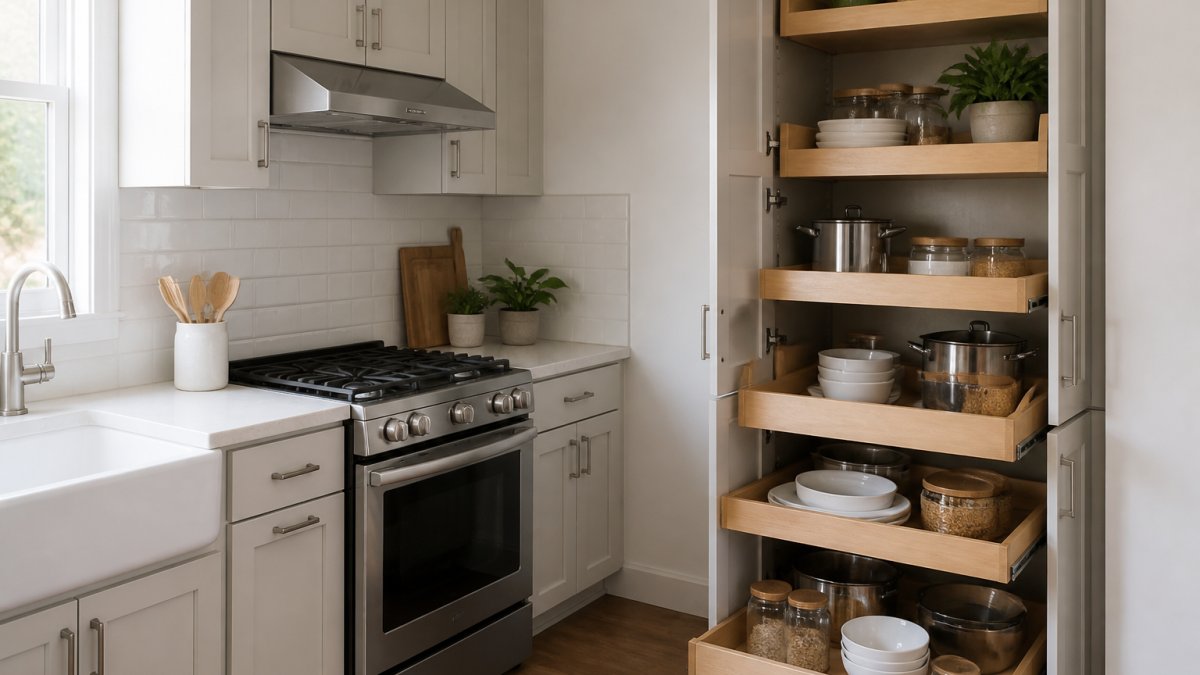
- Pull-out shelves: bring deep base cabinets forward so you stop kneeling to reach the back
- Shelf risers: double your usable shelf count for cans, spices, and glassware
Shelf risers are the cheapest win: a two-tier riser turns one crowded shelf into two visible rows.
Spice Organization and Utensil Management
Spice organization fails when jars sit two-deep with no labels facing out; a tiered insert or slim pull-down shelf fixes that. For utensils, an in-drawer tray beats a countertop crock by keeping the counter clear and tools dust-free.
Step 4: Small Kitchen Layout Design Tips for Better Counter Space
Small kitchen layout design tips all point to one goal: protect counter space, which makes a compact kitchen feel functional instead of overcrowded.
Step 5: No-Drill and Rental-Friendly Storage Upgrades
Rental-friendly storage exists without a single hole in the wall. Tension rods, rated adhesive hooks, over-the-door racks, and freestanding wire shelving deliver real capacity without forfeiting a deposit. The trick is matching the mount to the load, because every no-drill solution fails the same way: the mount gives out before the shelf does.
Match the Mount to the Load
Every no-drill option has a real-world weight ceiling, and exceeding it is how renters end up with broken glass on the floor. Use these ranges as a starting point, then check the manufacturer's rating, cheap imports often overstate capacity.
| Solution | Best For | Realistic Weight Limit | Removable |
|---|---|---|---|
| Tension rods | Under-sink spray bottles, wraps, cleaning caddies | 5-10 lb per rod | Yes |
| Adhesive hooks (rated) | Towels, utensils, measuring spoons, small pans | 3-5 lb per hook | Yes |
| Over-the-door racks | Lids, cutting boards, foil, wrap | 15-25 lb total | Yes |
| Freestanding wire shelving | Appliances, pantry overflow, small microwaves | 50-250 lb per shelf | Yes |
| Magnetic strips | Knives, spices, small tools | 5-10 lb per strip | Yes |
| Command-style strips | Light decor, small bins | 1-4 lb | Yes |
The Renter's Playbook, Room by Room
- Under the sink: two tension rods, one high and one low, turn the cabinet into a two-tier caddy for spray bottles and sponges. Add a small freestanding wire riser for dishwasher pods and trash bags.
- Inside cabinet doors: over-the-door racks hold pot lids, sheet pans, and cutting boards. Look for racks with foam or felt padding so the door finish does not scuff.
- On the backsplash: magnetic knife strips and magnetic spice tins stick to a steel range hood or refrigerator side without any hardware. On tile or painted drywall, use a removable adhesive strip rated for the load.
- On the wall: freestanding wire shelving units (often sold as 'storage towers') add vertical capacity without touching the wall. Anchor them to the floor with the included feet, not to the wall.
- On the floor: a rolling cart on casters doubles as a pantry and a prep surface, and rolls into a closet when you entertain.
What Actually Damages a Rental
The deposit risk is not the hook, it is the removal. Adhesive strips pull paint if yanked off cold; warm the strip with a hair dryer for 30-60 seconds, then pull straight down slowly. Tension rods leave no mark. Over-the-door racks can dent hollow-core doors if slammed while loaded, so keep the heaviest items on the hinge side.
Skip adhesive hooks on textured walls, fresh paint (under 30 days), or in rooms that swing between hot and cold. The adhesive fails within weeks, and a falling rack of glass jars is a real hazard. When in doubt, use a tension rod or freestanding shelf instead.
When No-Drill Stops Working
No-drill solutions top out fast. Once you store cast iron, a stand mixer, or a full pantry's worth of dry goods, adhesive and friction cannot carry that load safely. The honest options are freestanding furniture, a rolling island, or asking your landlord in writing to mount a single rail. Many landlords say yes to a well-anchored wall rail if you agree to patch and paint on move-out, and that permission unlocks the entire vertical wall above your counter.
Step 6: DIY vs. Custom Cabinetry: Where Your Money Goes Furthest
DIY storage saves money up front, but custom cabinetry wins on fit, durability, and resale. The answer depends on your space and how long you plan to stay, make the call with three numbers: the cost of the fix, the years you will stay, and the resale value it adds.
What Each Tier Actually Costs
These are typical U.S. ranges for a small kitchen (roughly 100-150 sq ft of cabinet frontage). Treat them as planning numbers, not quotes, material, region, and finish swing them widely.
| Tier | Typical Cost | What You Get | Best When |
|---|---|---|---|
| Repurposed household items | $0-$50 | Tension rods, shoe boxes as drawer dividers, mason jars, magazine files as lid holders | You need capacity this weekend and have no budget |
| Off-the-shelf inserts and risers | $50-$300 | Drawer dividers, shelf risers, pull-out baskets, stackable bins | Cabinets are standard depth (12 in base, 12 in upper) |
| Semi-custom / modular systems | $300-$1,500 | Adjustable pull-outs, corner lazy Susans, door racks sized to standard openings | You have a mix of standard and awkward cabinets |
| Full custom cabinetry | Pricing depends on cabinet count, materials, finish, and layout complexity. | Built-to-opening boxes, real-wood construction, sprayed finish, integrated pull-outs | You are remodeling, staying 5+ years, or the layout is genuinely non-standard |
The Decision Rule
Use this three-question test before you spend:
- Is the cabinet standard? If your base cabinets are 24 in deep and 12 in wide, off-the-shelf inserts fit and custom is hard to justify. If your cabinets are 19 in deep, angled, or built into a corner with a 30 in opening, stock products will rattle and custom earns its keep.
- How long will you stay? Under three years, buy removable. Over five years, custom starts to pay back in daily use and resale.
- Does the fix touch the layout? Moving a wall, adding a pull-out pantry, or reconfiguring a corner is custom territory. Adding a riser or a door rack is not.
Where DIY Genuinely Wins
- Shelf risers turn one crowded shelf into two visible rows for under $20 each.
- Magazine files make excellent lid and cutting-board holders inside a cabinet door.
- Shoe boxes or clear bins with a labeled edge create instant drawer dividers.
- A tension rod under the sink costs a few dollars and doubles usable space.
None require a drill, permit, or contractor, and all move with you.
Where Custom Earns Its Keep
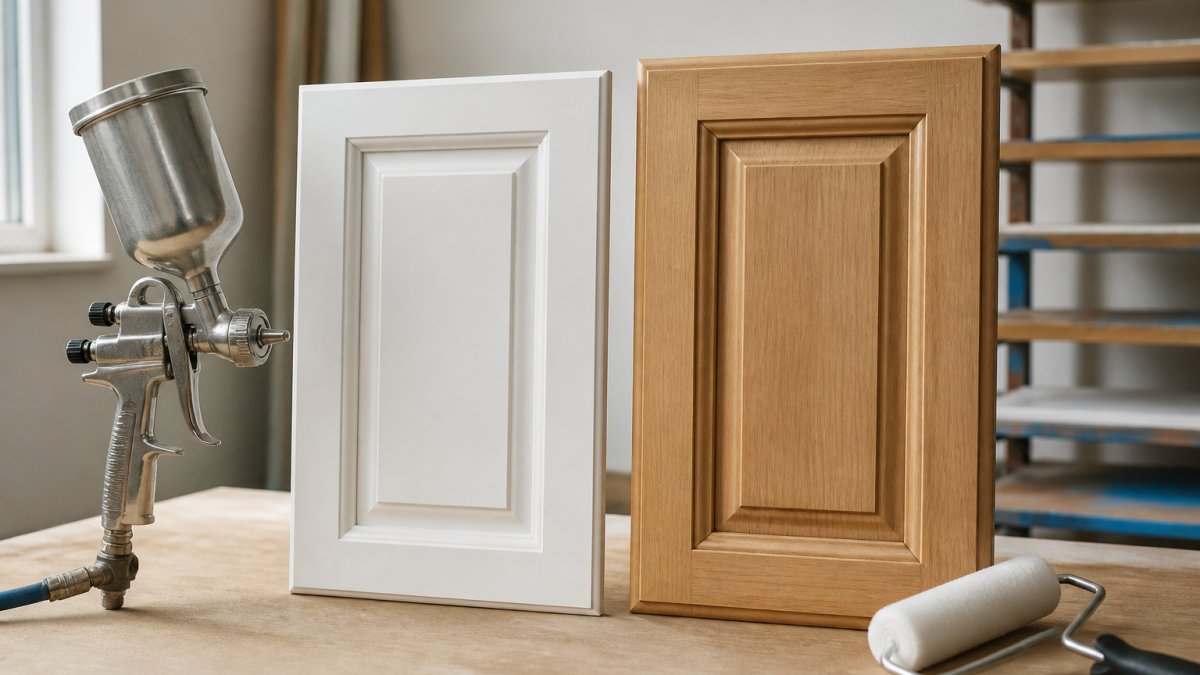
Real-wood custom built-ins solve problems stock products cannot: a corner lazy Susan sized to the actual opening, a pull-out pantry built to the exact depth of a narrow wall, or a mudroom drop zone matching the kitchen finish. Custom also lets you specify soft-close hardware, full-extension glides, and a sprayed finish that outlasts painted particleboard.
If you are staying put and your cabinets are non-standard, custom is the higher-return choice. If you are renting, moving soon, or working with standard boxes, spend the money on inserts and risers and keep the rest in your pocket.
Step 7: Build an Inventory System So Your Kitchen Stays Organized
An inventory system keeps a small kitchen from sliding back into chaos. Without one, you rebuy what you already own and cram new purchases into whatever gap is left.
Frequently Asked Questions
How can I add more storage to a small kitchen without remodeling?
Focus on vertical and non-permanent solutions first. Wall-mounted magnetic racks, over-the-door organizers, stackable containers, and shelf risers can add usable storage without touching a single cabinet. A tension rod under the sink holds spray bottles, and a rolling cart fits in the gap beside the fridge. These upgrades typically cost far less than a renovation and can be removed or rearranged as your needs change. If you eventually want built-in solutions, a custom cabinet maker can design around what you already have.
What are the best custom cabinetry solutions for small kitchens?
Pull-out pantry systems, deep drawer dividers, and floor-to-ceiling cabinets make the most of tight quarters. Custom kitchen cabinet organization can turn a 12-inch-wide cabinet into a functional spice pull-out or a tray divider. Built-in solutions work especially well in older homes with unusual angles where standard box cabinets leave gaps. A cabinet maker measures your exact space, so every inch of cabinet depth gets used. Pricing depends on materials, size, and finish, so request a quote for your specific layout.
What are the most effective vertical storage ideas for kitchens?
Go up, not out. Install open shelves above the counter, mount magnetic racks on the backsplash for knives and spices, and hang pots from a ceiling rack if your layout allows. Door organizers on the inside of cabinet doors hold lids, cutting boards, and foil. A tall narrow pull-out beside the stove stores oils and utensils within arm's reach. The goal is to move daily essentials off the counter and into accessible storage at eye level or above.
How do I organize a small kitchen to make it look bigger?
Reduce visual clutter and let surfaces breathe. Keep counters mostly clear by storing appliances you use less than weekly. Use matching stackable containers in the pantry so shelves read as one clean block instead of a jumble. Light colors on cabinets and walls reflect more light, and open shelving with a few styled items creates depth. A minimalist kitchen looks larger because your eye has fewer objects to process. Pair that with hidden storage for the messy items and the room feels twice its size.
Small kitchens punish guesswork. Every inch you reclaim has to earn its place, and the difference between a kitchen that works and one that fights you usually comes down to fit, not volume. The Pampered Home designs and builds custom cabinetry from real wood, with sprayed finishes and tailored layouts for awkward spaces, so storage fits your kitchen instead of the other way around. Get started with The Pampered Home and turn your tightest room into the one that works hardest.